





A research group from Ústav materiálov a mechaniky strojov SAV focused on the development of partially and fully bioresorbable metallic biomaterials based on zinc, magnesium, and titanium, completed an intensive scientific programme across three major Chinese research centres between April 8 and 24, 2026.
The programme included participation in the prestigious International Conference on Biomaterials 2026, expert seminars at leading universities, laboratory visits, and discussions on new opportunities for scientific collaboration in the field of biomaterials and implant technologies.
Shenzhen: Biomaterials research presented at the Elsevier Biomaterials conference
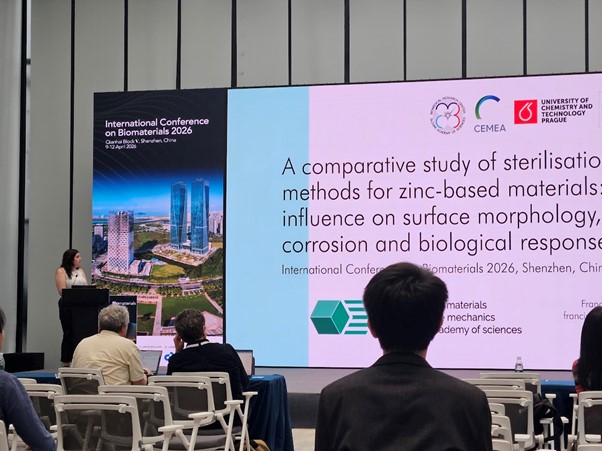
The first stop was Shenzhen, where the team participated in the prestigious Biomaterials conference organized by Elsevier. The researchers presented results achieved within the following projects:
- Recovery and Resilience Plan 09I03-03-V04-00718
- APVV-20-0417
- VEGA 2/0010/26
The following contributions were presented during the conference:
Oral presentation
- F. Seabra – A comparative study of sterilization methods for Zn-based materials: influence on surface morphology, corrosion and biological response
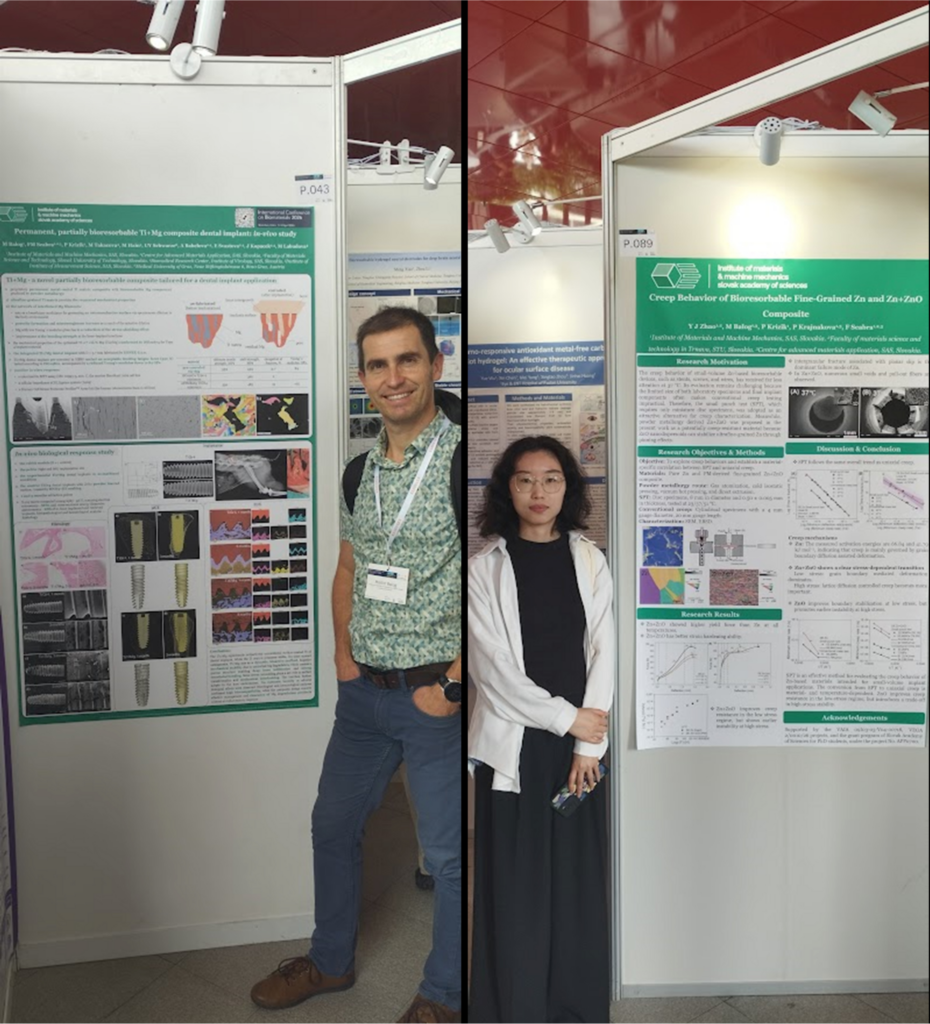
Poster presentations
- M. Balog – Permanent, partially bioresorbable Ti+Mg composite dental implant
- Y. Zhao – Creep Behavior of Bioresorbable Fine-Grained Zn and Zn+ZnO
The programme also included a visit to the powder metallurgy group led by Prof. Ming Yan at Southern University of Science and Technology (SUSTech). Researchers from ÚMMS SAV introduced the activities of the Department of Powder Metallurgy Composites during an internal seminar, where they presented the following contributions:
- M. Balog – The Department of Powder Metallurgy Composites, IMMM, SAS + High-strength bioresorbable fine-grained Zn0.15wt.%Mg stabilized by nanometric ZnO
- F. Seabra – Permanent, partially bioresorbable Ti+Mg composite dental implant: in vivo study
- Y. Zhao – Feasibility of Small Punch Testing for Evaluating Creep Behavior of Different Zn-Based Materials and Composites
The visit was followed by discussions with Prof. Ming Yan regarding potential collaboration on the development of a high-modulus Ti composite material produced through additive manufacturing using powder-based 3D printing.
Guangzhou: Collaboration in in-vivo testing of biomaterials
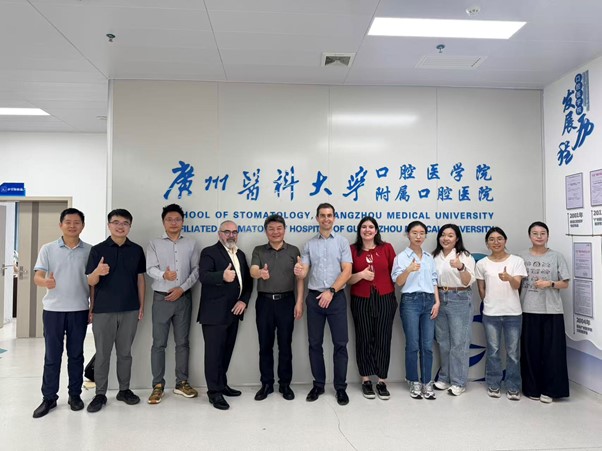
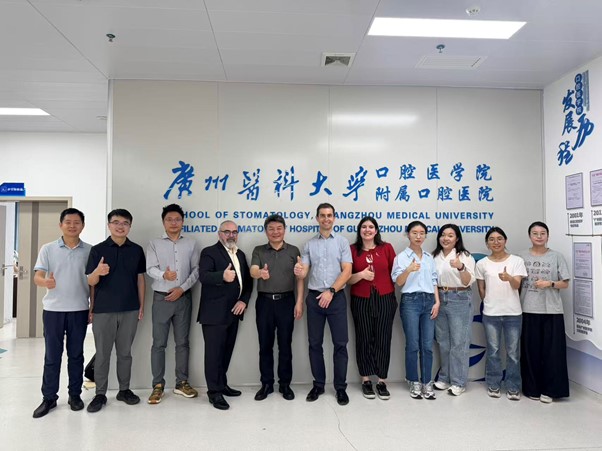
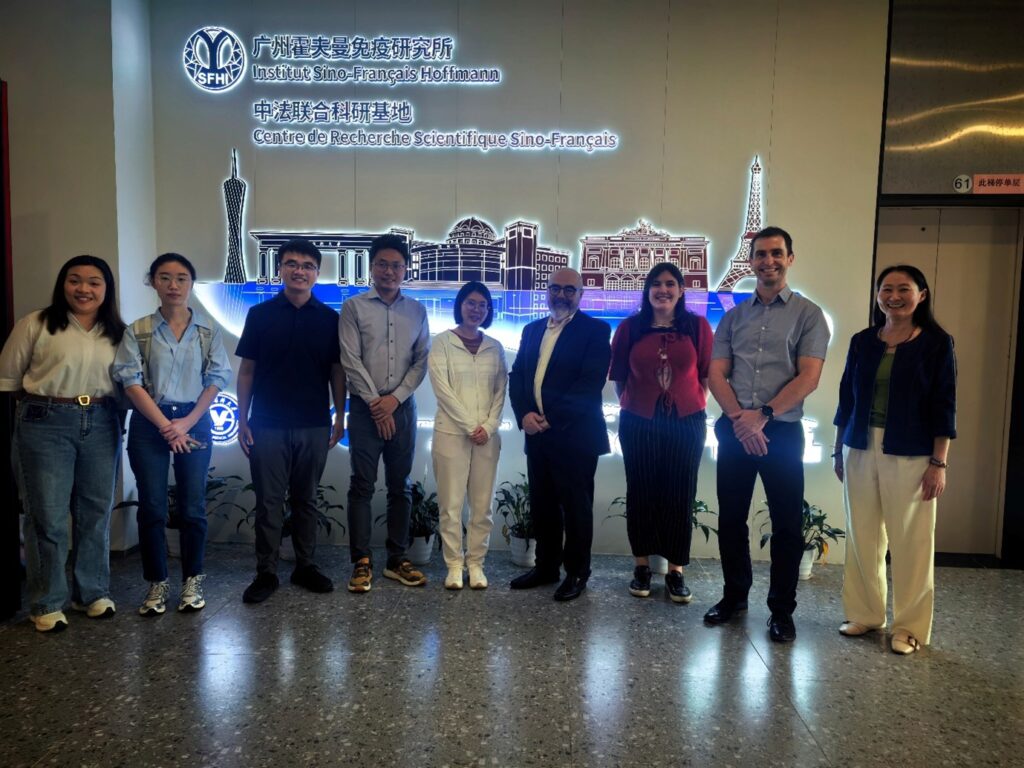
In Guangzhou, the team visited the Stomatology Hospital of Guangzhou Medical University, where they have long-term collaboration with Prof. Ping Li on in-vivo testing of advanced Zn+ZnO composite materials using animal models.
The researchers toured laboratories and clinical facilities across two locations. The professional programme also included a presentation of Francisca Seabra’s research results through the lecture Permanent, partially bioresorbable Ti+Mg composite dental implant: in vivo study.
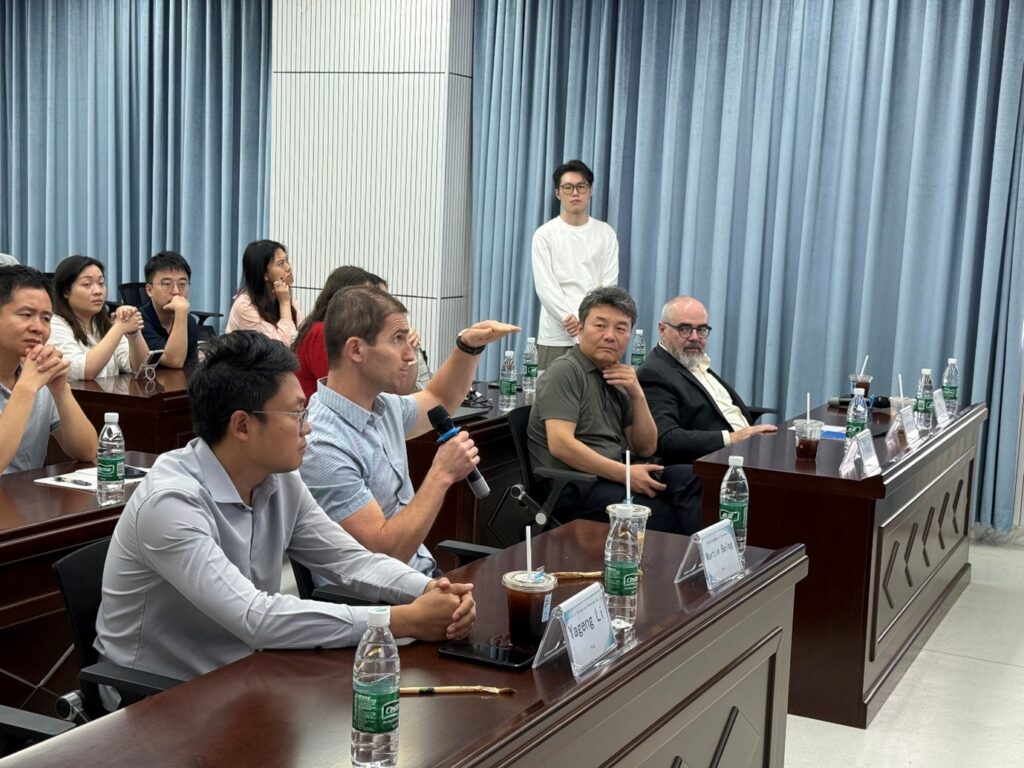
The visit continued with an expert discussion involving Prof. Ping Li, Prof. Y. Li, and Prof. Diego Mantovani, an internationally recognized expert in bioresorbable metallic materials. The discussions focused on further collaboration in implant biomaterials research and biological evaluation of novel materials.
Shanghai: New areas of collaboration in Zn biomaterials research
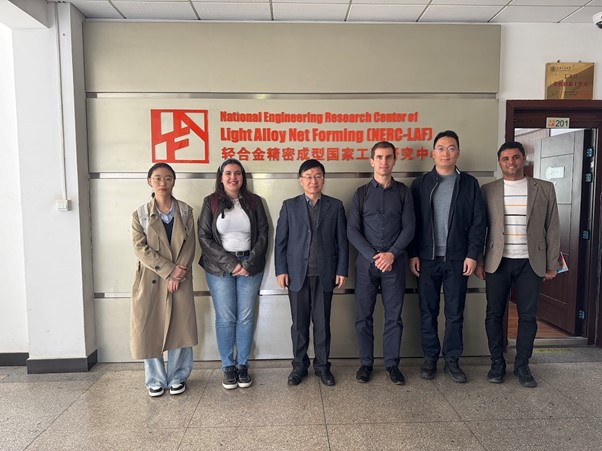
The final stop was Shanghai Jiao Tong University, one of Asia’s most prestigious technical universities. The research team visited the National Engineering Research Center of Light Alloy Net Forming and the group led by Prof. Guangyin Yuan, specializing in bioresorbable metallic implant materials.
Interestingly, the group currently includes former ÚMMS SAV PhD student Ahmed Mohamed Hasan Ibrahim, who continues his research on Ti+Mg materials there as a postdoctoral researcher.
During the internal seminar, the following presentations were delivered:
- M. Balog – The Department of Powder Metallurgy Composites, IMMM, SAS + High-strength bioresorbable fine-grained Zn0.15wt.%Mg stabilized by nanometric ZnO
- F. Seabra – Permanent, partially bioresorbable Ti+Mg composite dental implant: in vivo study
- Y. Zhao – Feasibility of Small Punch Testing for Evaluating Creep Behavior of Different Zn-Based Materials and Composites
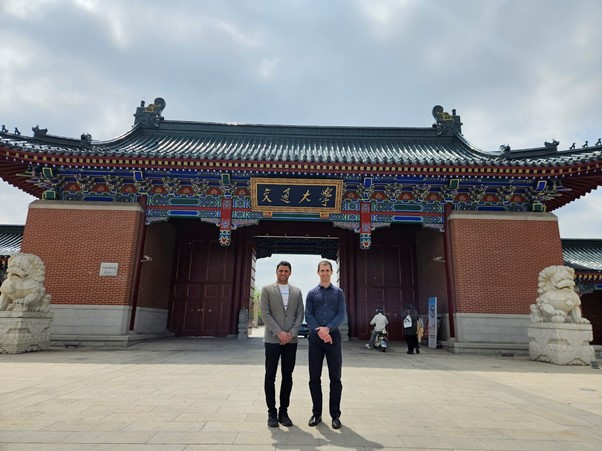
The professional meetings subsequently resulted in the proposal of four specific areas of joint research focused on Zn biomaterials, with part of the collaboration already underway.
The working visit confirmed the growing international importance of biomaterials research conducted at ÚMMS SAV while also opening new opportunities for strategic scientific cooperation with leading Asian institutions in the field of bioresorbable metallic materials and implant technologies.
Text: M. Balog, S. Múčková
Photo: M. Balog, F. Seabra